

This site contains affiliate links. We may receive a commission if you make a purchase after clicking on one of these links. See Our Disclaimers for more info.
It might sound too simple, but I think optimism is one of the most valuable skills you can develop in your career.
Now, I don’t mean ignoring reality or pretending everything is going to work out.
I’m talking about how you look at a situation when things don’t go the way you expect.
In my life, I’ve found there is usually a positive way to look at a situation and a negative way.
And the way you choose to look at it can change what you do next.
That’s important to understand because obstacles are going to happen.
- You might get passed over for a promotion.
- You might get laid off.
- You might have a difficult manager.
- A project might fail.
- Or you might find yourself stuck somewhere you don’t want to be.
The natural reaction is to think:
“What am I going to do now?”
But there’s another question you can ask:
“How do I make the best of a bad situation?”
That’s the question that can turn an obstacle into an opportunity.
In this episode, I am going to discuss:
- Why obstacles are inevitable
- How your perspective can change what happens next
- How I learned to look at setbacks differently
- How a celebrity turned multiple setbacks into career advantages
- Three ways to build a more optimistic approach to your career
The Pattern: Obstacles Are Inevitable

There is one thing you can pretty much count on in your career.
Something is going to go wrong.
You can work hard, build your skills, and do everything right, and things can still happen that are completely outside your control.
Companies lay people off. Managers leave. Promotions go to someone else. Projects get cancelled. Businesses change direction.
I even have multiple examples of this in my career:
- I’ve been laid off and fired several times
- I’ve dealt with some horrible bosses
- I’ve been overlooked for raises and promotions
- Sometimes, you make a mistake that can follow you for years.
None of this is unusual.
The problem is that when something goes wrong, we tend to focus on the situation that we’re in instead of thinking about what could come next.
We see the obstacle, and that’s all we see.
But an obstacle doesn’t necessarily tell you where the story ends.
Sometimes, it just changes the direction.
And one of the best examples I can think of is Arnold Schwarzenegger.
Arnold Schwarzenegger: Turning Obstacles Into Opportunities
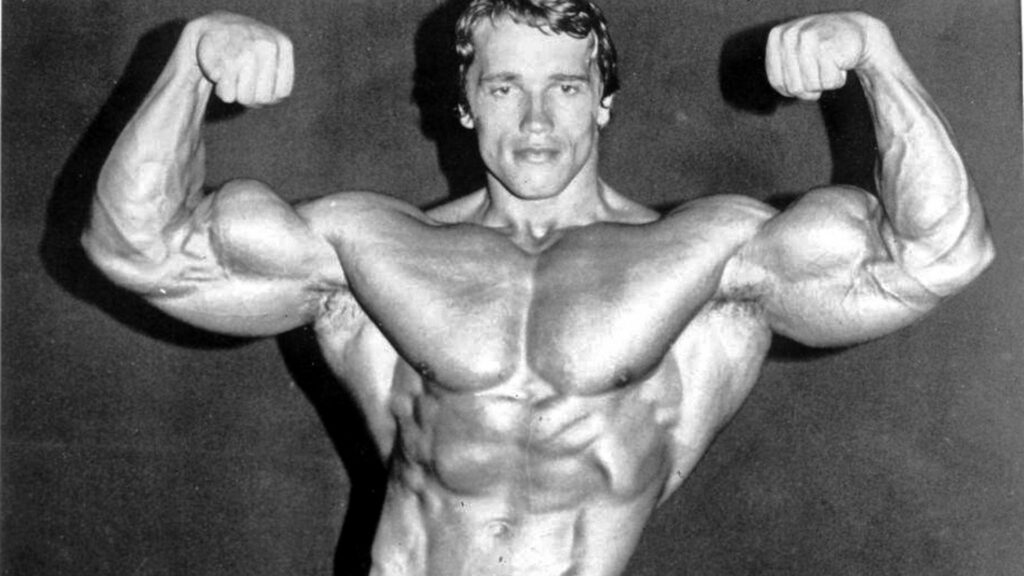
Whether you like Arnold Schwarzenegger or not, he had a very specific vision for his career.
After becoming one of the world’s most successful bodybuilders, he wanted to become a leading man in Hollywood.
And at the time, there were plenty of reasons why that shouldn’t have worked.
- He had a massive body that wasn’t exactly the standard at the time.
- His German accent was extremely noticeable.
- His last name was difficult for many people to pronounce.
He also faced plenty of people who told him he couldn’t make it. But Arnold had already seen someone else do something similar.
Reg Park was a British bodybuilder who successfully transitioned into acting and became known for playing Hercules in films during the 1960s.
Arnold saw what was possible and decided he wanted to do it himself.
The obstacles were still there. But eventually, some of those obstacles became advantages.
His Body
Arnold’s physique was different from what Hollywood was used to seeing.
Actors like Dustin Hoffman, Al Pacino, and Woody Allen were much closer to the typical leading-man image at the time.
Arnold looked completely different. But then Conan the Barbarian came along.
Suddenly, the thing that made Arnold unusual was exactly what the role needed.
His massive body was no longer a liability. It was an asset.
His Accent
Originally, the Terminator was supposed to look and sound completely human.
But Hollywood isn’t always realistic.
Arnold’s German accent gave his voice a slightly robotic quality, which actually worked for the character.
Once again, his massive, muscular body became an asset, making him incredibly intimidating as a villain.
Two things that could have been weaknesses became part of what made the Terminator so memorable.
His Last Name
Then there was his last name: Schwarzenegger.
People told him he needed to change it because it was too difficult to pronounce. Some people even joked about it. But he kept it.
Eventually, Schwarzenegger became one of the most recognizable names in Hollywood.
Something that looked like a disadvantage became part of his identity.
I think that’s the bigger lesson.
Arnold didn’t necessarily know that these things would become advantages.
He just wouldn’t let them convince him that his goal was impossible.
The Shift: Stop Trying to Control the Uncontrollable

I’ve seen the same thing happen in my own career.
I’ve been laid off before. And when you get laid off, the natural reaction is:
“Uh oh. What do I do now?”
You start worrying about finding another job.
You wonder if you’re going to make as much money.
You hope that you’re going to find something you actually like.
It’s easy to assume the next thing will be worse. But in my experience, the next opportunity has usually been better than the last one.
And sometimes, you need to have a bad experience to really appreciate a good one.
I’ve had jobs with strict deadlines and managers who could be brutal when you made a mistake.
Now I have a great boss who trusts me, helps me, and works with me to make the company better.
Don’t get me wrong, we still make mistakes. The difference is that we focus on solutions instead of putting each other down.
That’s a completely different work environment, and I probably wouldn’t appreciate it as much if I hadn’t experienced the opposite.
That’s why I think optimism is so important.
You don’t have to convince yourself that a bad situation is good.
You have to recognize that you don’t always know what comes next.
You can’t control everything that happens to you. But you can control how you react.
The Leverage: Turn Liabilities Into Assets

This is where optimism becomes leverage. It’s not enough to simply think positively. You have to look at the situation differently.
Instead of asking:
“Why is this happening to me?”
Ask yourself:
“How do I make the best of a bad situation?”
- Getting laid off could force you to find a better company.
- Getting passed over for a promotion may give you the experience you need for a better position somewhere else.
- Maybe a difficult project teaches you a skill you wouldn’t have learned otherwise.
And sometimes, a trait that seems like a weakness can actually become part of what makes you valuable.
I’ve done something similar in my own career.
For as long as I can remember, I’ve been really good at noticing what’s wrong.
My wife actually calls it “Nick-picking” instead of nitpicking. And she’s not wrong.
- I notice grammar mistakes.
- I notice expired license plate tags.
- I’ll notice a typo on a sign that everyone else has walked past a hundred times.
I’ve been doing this my entire life.
When I was about four years old, I told my Mom that I knew Santa wasn’t real because she and Santa used the same wrapping paper.
And when I was a little older, my family went to Carl’s Jr (Hardee’s for you East Coasters). An older woman working there opened the door for us and said, “Welcome to Carl’s.”
And I immediately corrected her. “It’s Carl’s Jr.”
In hindsight, I guess I’ve always been this way.
For a long time, I probably would have considered this more of an annoying personality trait than a career advantage.
But eventually, I realized there was some value in it.
I started noticing problems other people didn’t see.
- Grammar errors.
- Broken processes.
- Confusing instructions.
- Low morale on the team.
Things that weren’t working the way they should. And that became useful.
It helped me as a manager, an editor, and eventually, it became a big part of being a writer.
The point isn’t that you should turn every personality quirk into a career skill.
It’s that sometimes the things that make you different can become valuable when you find the right place to use them.
That’s leverage.
You’re not pretending the obstacle doesn’t exist. You’re figuring out whether there’s another way to use it.
3 Actionable Steps: Build an Optimistic Career Mindset
1. Separate Facts From Assumptions
When something goes wrong, start by separating what you actually know from what you’re assuming.
- “I was laid off.” That’s a fact.
- “I’ll never find another job.” That’s an assumption.
- “My career is over.” That’s another assumption.
It’s easy for one bad event to turn into an entire negative story in your head. I know because that’s exactly what I did.
When I was unemployed and looking for work in 2024, I had those same thoughts.
I wondered how long it was going to take, or if I was going to find another job I actually liked.
I had no idea what was going to happen next.
But then an opportunity appeared.
I applied, got the job, and two years later, I’m in a completely different role than the one I had before.
The best part is, I’m way happier than I ever was during my “dream” automotive career.
And looking back, that period of uncertainty wasn’t the end of my career.
It was a transition to something new.
That’s the part you can’t always see when you’re in the middle of a setback.
You don’t know the ending yet. So focus on what you actually know. Then figure out what you can control.
2. Keep Moving Toward the Vision
Optimism without action isn’t much use.
You still have to keep moving.
If you want a better career, keep building your skills.
If you want a new job, keep meeting people.
If you want to build a business, keep creating.
And if your original plan doesn’t work, change the route.
The destination doesn’t always have to change just because the path does.
That’s what Arnold did.
He knew where he wanted to go.
The path just looked very different from what most people expected.
3. Keep Your Ideas to Yourself Until They’re Fully Developed
When we start a new project, set a new goal, or decide we want to change something in our lives, one of our first instincts is often to tell someone.
Maybe we post it on social media.
Maybe we tell our friends and family.
We’re excited, so we want to share it.
And you’ve probably heard the advice:
“Tell everyone so you’ll stay accountable.”
And sometimes that works.
But I think it can also be a mistake.
When you tell someone about a new idea, you’re opening it up to their opinion before you’ve had a chance to develop it yourself.
They might tell you why it won’t work.
They might tell you it’s unrealistic.
They might say, “I tried that and failed.”
Or they might simply think you’re making a bad decision.
The key is to not take it personally.
They’re usually giving you advice based on their own experience and what they believe is possible.
But their experience isn’t yours.
And when you’re still figuring out an idea, that outside negativity can be enough to kill it before you ever give it a chance.
I’ve had this happen myself.
When I started my first nutrition website, I told some family members about it.
The first thing I heard was:
“Oh, you can’t make money online.”
They weren’t trying to discourage me. They were giving me their opinion based on what they believed was possible.
But if I had listened to every objection before I even started, I never would have found out what was actually possible.
There have been other things I’ve wanted to do where I could already hear the objections before I even started.
So now, I develop the idea first. I figure out what I’m actually trying to accomplish.
I work through the problems. I make a plan.
And then, once it’s developed enough that someone can’t easily talk me out of it, I’ll share it.
Or better yet, I’ll share the result.
Instead of saying:
“I’m going to do this.”
You get to say:
“I did this.”
That’s a big difference.
You don’t have to hide your goals forever. You just need to give your ideas enough time to become real before you hand them over to everyone else’s opinions.
And sometimes, protecting your optimism means protecting an idea while it’s still fragile.
Final Thoughts: You Decide What You Focus On

I believe everything happens for a reason.
But I also believe we have more control over our lives than we sometimes realize.
We can’t control everything that happens to us. We can’t control whether we get laid off, what other people think, or what a company decides to do.
But we can control what we focus on. And that’s where optimism comes in.
Optimism doesn’t mean ignoring reality. Something can be true without becoming your truth.
When I got fired for the first time in my career in 2014, my first reaction was:
“Oh my God, what am I going to do?”
But a few hours later, after the initial shock wore off, I started looking at the situation differently.
- I realized I had been miserable at that job for the last two years.
- I didn’t have to deal with three bosses I didn’t like or respect anymore.
- And I realized my disabled mother could move in with me while I got back on my feet. She could help with the rent, and I could help take care of her.
Getting fired wasn’t what I wanted.
But it opened up possibilities I couldn’t see when it first happened.
That’s the power of optimism. You don’t control the entire story.
But you do have a say in how you respond to it.
And that’s really what the first five episodes of this season have been about.
- Taking control.
- Building leverage.
- Recognizing patterns.
- Building your reputation.
- And turning obstacles into opportunities.
But there’s one idea connecting all of them:
You have more control than you think.
And in the next episode, we’re going to bring everything together and talk about what happens when you take that idea even further.
How to take control of your mindset, your reactions, and ultimately, your career.