

This site contains affiliate links. We may receive a commission if you make a purchase after clicking on one of these links. See Our Disclaimers for more info.
Over the last five episodes, we’ve talked about taking control of your career by using leverage.
According to Merriam-Webster, leverage means “influence or power used to achieve a desired result.”
But I think of leverage a little differently.
To me, leverage is finding a way to make something easier with less effort.
And that’s really what Success Instead of Stress means.
Instead of constantly working harder, find ways to make your work work harder for you.
Here’s a quick recap of what we’ve talked about:
Episode 1: AI is replacing jobs, but building your skills can make you indispensable.
Episode 2: Media professionals are often underpaid, but getting closer to decision-making can increase your value.
Episode 3: The hardest-working people can sometimes get stuck because they’re too good at what they do. If you want something different, you may have to break out of that pattern.
Episode 4: Your reputation can be more valuable than any individual skill you acquire.
Episode 5: Career setbacks are inevitable, but how you respond to them can change what happens next.
But I think there’s something you need to figure out before you can really put any of these ideas into practice.
What do YOU actually want?
That might seem like a dumb question, but stay with me for a minute.
In my own life, I spent a lot of time doing what I thought other people wanted from me instead of figuring out what I actually wanted to do.
But when I started doing things because I wanted to do them, everything changed.
And I think that’s the most important career decision you can make.
Not what job you should have.
Not how much money you should make.
Not what other people think you should be doing.
What do you actually want?
In this episode, we’re going to talk about:
- How to figure out what you actually want
- What has made me the most satisfied in my career
- How to define your own version of success
- The three most important questions you need to ask yourself
The Pattern: Your Career Doesn’t Have to Be a Straight Line
Like a lot of people, I had a pretty typical middle-class American upbringing. I did okay in school, and I could get good grades when I applied myself.
But unless I was really interested in a subject, I got bored pretty easily.
The classes I did best in were English and writing, music, and computer science. Looking back, that was probably an early sign of what I should have been focusing on.
But instead, I had multiple people telling me what I should be doing.
A guidance counselor told me I should pursue math and engineering because I had a great memory.
My music teacher told me I should pursue a career as a performing artist because both of my parents were musicians.
And my English teacher told me I should be a writer.
With all those different opinions, it’s easy to become influenced by the people around you. And when you’re young, it makes sense that you don’t necessarily know what you want to do with your life.
But I think there’s another part of this that gets overlooked. You don’t have to know right away.
Part of figuring out what you want is discovering what you don’t want.
I thought I wanted to become a psychologist.
Then I thought I wanted to get into finance and accounting.
Then I became a nutritionist and massage therapist.
Then I went into office management.
Eventually, I found my way into writing, digital marketing, and editing.
Each step got me a little closer to what I actually enjoy doing. And I’m sure I’ll make several more changes throughout my lifetime.
I still love music. I want to get more involved in automotive content, auctions, and track events. There are still things I want to explore that I haven’t figured out yet.
And I think that’s okay.
My point is that we’re often taught to be rigid about our careers. Pick a path. Choose a major. Get a job. Work your way up. Stay on the path.
But I think there’s a lot of value in being flexible and experimenting.
You might discover something you never expected to enjoy.
You might discover something you definitely don’t want to do.
And both of those things can help you figure out where you actually want to go.
Your career doesn’t have to be a straight line. Sometimes you have to try a few different paths to figure out which one is actually yours.
The Shift: Define Your Version of Success
Whether you’re just starting your career, you’re in your 40s like me, or you’re later in life, I think this can apply to you.
You need to figure out what actually makes you happy.
Even if you don’t think it’s possible. Even if you don’t think it’s realistic. Really think about it for a minute.
What do you actually enjoy doing?
Even something as simple as saying, “I like playing video games,” can lead to a career these days. You could stream, get into esports, become a YouTuber, write about games, or start a podcast about them.
The point is to start with what you enjoy and see where it can take you.
For me, I eventually figured out that I really like creating things and coming up with solutions to problems.
When I worked for a reputation management company, we would update clients’ Google local listings. I noticed that you could upload an animated GIF as a profile image.
So when someone searched for a business, the local listings would show that GIF. The movement naturally drew your eyes toward that business.
It was a small thing, but I enjoyed figuring out how to make the listing stand out.
When I worked for Avoya Travel, I came up with a bonus structure that incentivized our call center reps to send over higher-quality leads, improve their speed, and nurture customers before sending them to a travel agent for more information.
Call volume improved. Conversions improved. Customer satisfaction improved.
And it was a relatively small cost to the company.
Again, I enjoyed creating something that solved a problem.
Later, I was responsible for training the call center reps.
I would do a training session every week, and by the end of the week, my voice was usually gone from talking so much.
And a lot of what I was saying was the same thing over and over.
So I started making training videos instead.
The reps could watch the videos throughout the week, and I could spend the actual training sessions answering questions, adding new information, and focusing on the things that needed more attention.
It was more efficient, and I enjoyed creating the solution.
That’s when I started to recognize the pattern.
I loved creating.
That has continued throughout my career with personal websites, automotive writing, commerce writing, and music.
Creating things and solving problems have probably made me the happiest and most satisfied I’ve ever been in my career.
And I don’t think I’m the only person who feels that way. Research has found a connection between everyday creative activities and greater well-being.
One 2024 study published in the Journal of Research in Personality found that people experienced more positive emotions when they engaged in creative activities, in part because those activities gave them a greater sense of autonomy and competence.
That makes a lot of sense to me.
There’s something different about actually creating something instead of just consuming it.
You made something. You solved something. You took an idea that existed in your head and turned it into something real.
I think that feeling is worth paying attention to.
That’s just what I discovered. You may discover something completely different. And that’s okay.
The Leverage: Build Toward What You Want
Once you know what you want to do, it’s time to start building toward that outcome.
You’ll probably have some natural talents that point you in the right direction, but you’ll still need to develop the skills and experience to get where you want to go.
Want to become a CEO? Build leadership experience, relationships, and business knowledge.
Want to become an expert? Build specialized skills and a reputation.
Want to start a business? Build skills, an audience, relationships, and financial runway.
Want a comfortable job you enjoy? Build enough skills and leverage that you have choices about where you work.
The key is leverage.
You can imagine your dream career, and you should. But imagining it will only get you so far.
You need the skills, experience, reputation, and ultimately, the positive attitude to actually get there.
I did it. And so can you.
3 Questions: Figure Out What You Want
So how do you actually figure out what you want? I think there are three questions you should ask yourself.
1. What do you actually enjoy doing?
This might be the most important question you can ask.
What do you genuinely enjoy doing?
You might not know the answer yet, but I’m willing to bet you have a pretty good idea.
For years, I wanted to be wealthy.
But instead of starting with what I genuinely enjoyed, I spent a lot of time thinking about what I thought could work, or what other people told me I should do.
So take a step back.
What do you actually enjoy?
2. What are you naturally good at?
There’s a common saying: “If you put your mind to it, you can accomplish anything.”
I think I even heard it in Back to the Future.
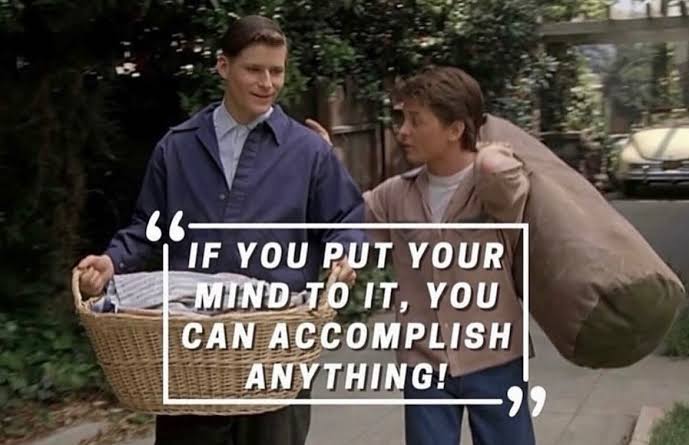
And while I do believe you can accomplish great things, probably more than you realize, I also think you should focus on something that’s within your realm of possibilities.
For example, I like weight training and bodybuilding. But I’m never going to have a physique like Jay Cutler or Ronnie Coleman, even with “chemical assistance.”
I’m never going to be a great basketball player like Michael Jordan.
I just don’t have the genetics or natural talent to be successful in those fields.
But I do have a natural talent for writing and editing. I have a musical ear.
I’m pretty good at video games and driving cars. And I have a great memory.
Only you can answer what you’re naturally good at, but once you figure it out, you can start applying those strengths to where you want to go.
There doesn’t have to be a completely straight path.
But you should be realistic about what’s actually possible based on your skills, natural talents, and genetics.
3. Why do you want these things?
This might seem like a “duh” question, but hear me out.
Why do you want this career or this path?
In many cases, the answer might be based on something negative.
If you say, “I want this job because I hate my boss,” your focus is still on hating your boss.
But if you say, “I want this new job because it will give me more freedom, flexibility, and satisfaction in my life,” that’s a different way of looking at it.
One keeps your attention on what you want to get away from.
The other points you toward what you actually want.
And I think that distinction matters. Because once you know what you enjoy, what you’re naturally good at, and why you want it, you can start building the leverage to get there.
Final Thoughts: Build the Life You Want to Live
If there’s one thing I hope you take away from this season, it’s that you have more control over your career than you might think.
You can build skills.
You can build your reputation.
You can build relationships.
You can turn obstacles into opportunities.
And you can figure out what you actually want.
But for me, the bigger idea behind Success Instead of Stress is about more than just your career.
It’s about building a great life with as little unnecessary stress as possible.
Doing what you want is a big part of that.
But there’s another piece that I’ve learned along the way.
Financial leverage matters too.
For me to get to a point where I have more freedom and more choices, I’ve had to build a financial cushion.
That means saving money. Investing. Building additional sources of income.
And sometimes, simply putting in the work now so you have more choices later.
If you’re struggling financially right now, this might be hard to hear.
I know, because I’ve been there too.
There were a few points in my adult life when I was struggling financially and had very little control over my situation.
But I made it through. And now, I live an incredible life.
It’s not perfect. And honestly, it never will be.
But one of the first milestones that got me to where I am today was learning how to budget my money, pay off my debt, save, and invest.
Those things might not sound very exciting.
But they gave me something incredibly valuable.
Options.
And the more options you have, the more control you have over your life.
Ultimately, I think the goal is to find work that pays well and that you actually enjoy doing.
But that doesn’t always happen immediately.
Sometimes you have to put in the work, build the skills, gain the experience, and create the leverage to get there.
And I think that’s similar to the idea of retirement.
We’re often told to work for 40 years, save enough money, and only then start enjoying your life in your 60s.
But why wait that long?
Financial independence now (or in the very near future) can give you some of those choices much earlier.
When you have enough financial cushion, you don’t necessarily have to stay in a job you hate.
You can take a risk.
You can change careers.
You can work fewer hours.
You can start a business.
Or you can simply have the peace of mind that comes from knowing you have options.
Financial independence doesn’t eliminate stress. Nothing does.
But it can reduce some of the stress that comes from feeling trapped.
And that’s really what SIOS is about.
More control. More choices. Less unnecessary stress.
This season was about building career leverage.
Next season, we’re going to talk about another kind of leverage that can give you even more freedom:
Financial leverage.
Because the ultimate goal isn’t just to build a successful career.
It’s to build a life you actually want to live.
Thanks for reading,
Nick Hazleton